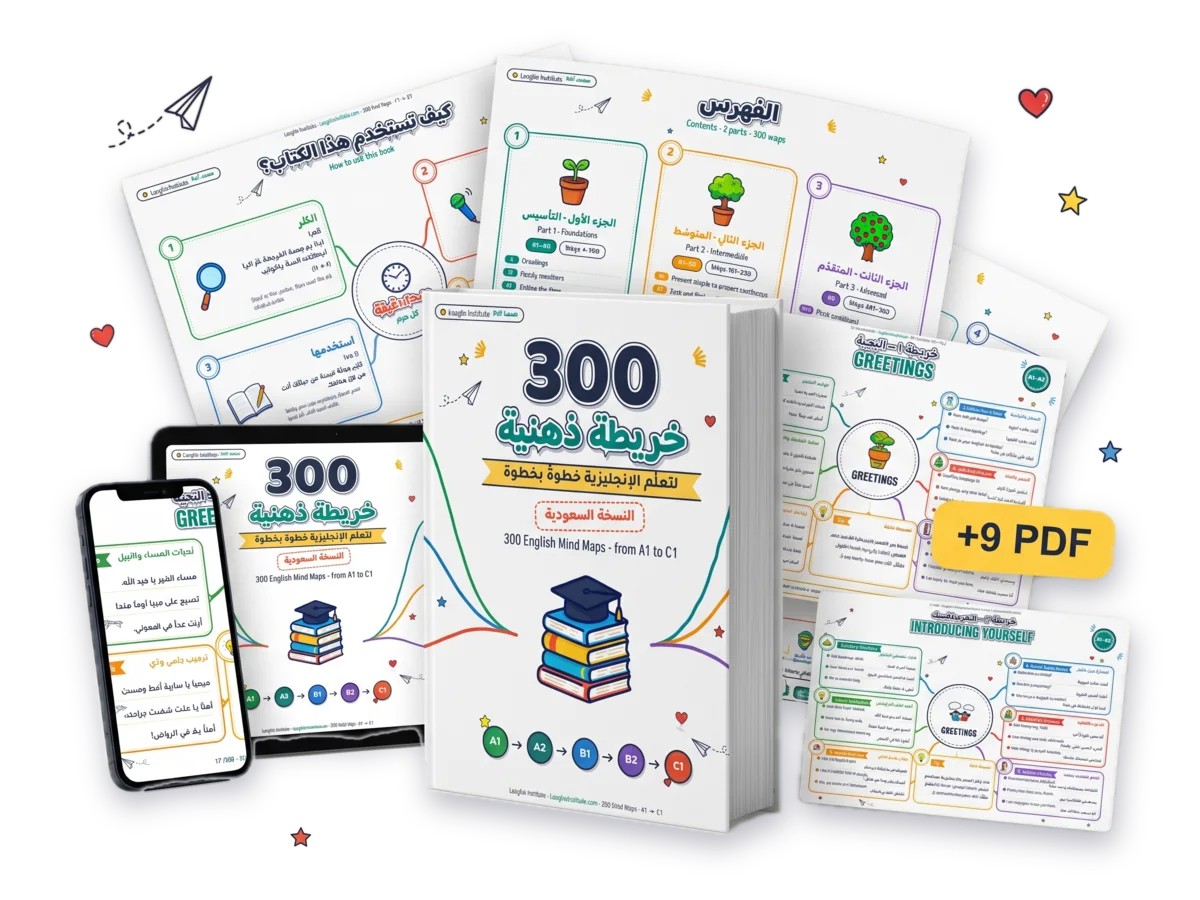
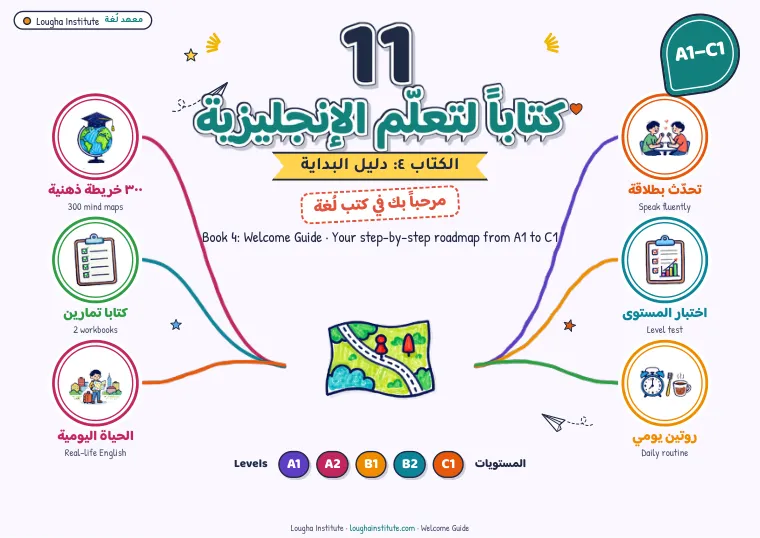
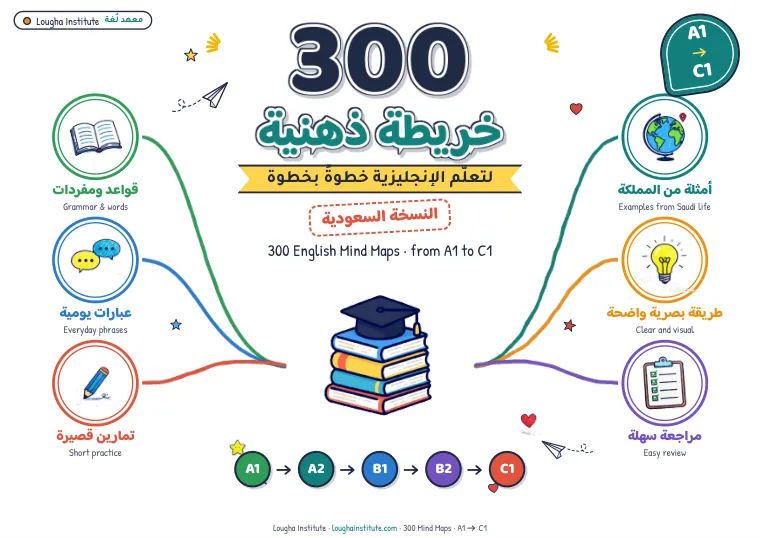
Three parts of 100 maps each, from the basics up to advanced.
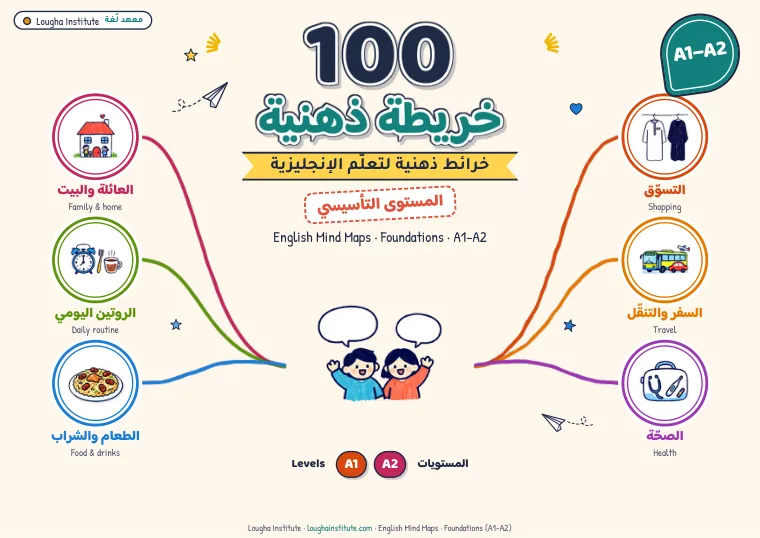
Part 1 · Foundations A1–A2 100 maps
Key words, short sentences, questions and answers in simple situations.
Maps 1–20+
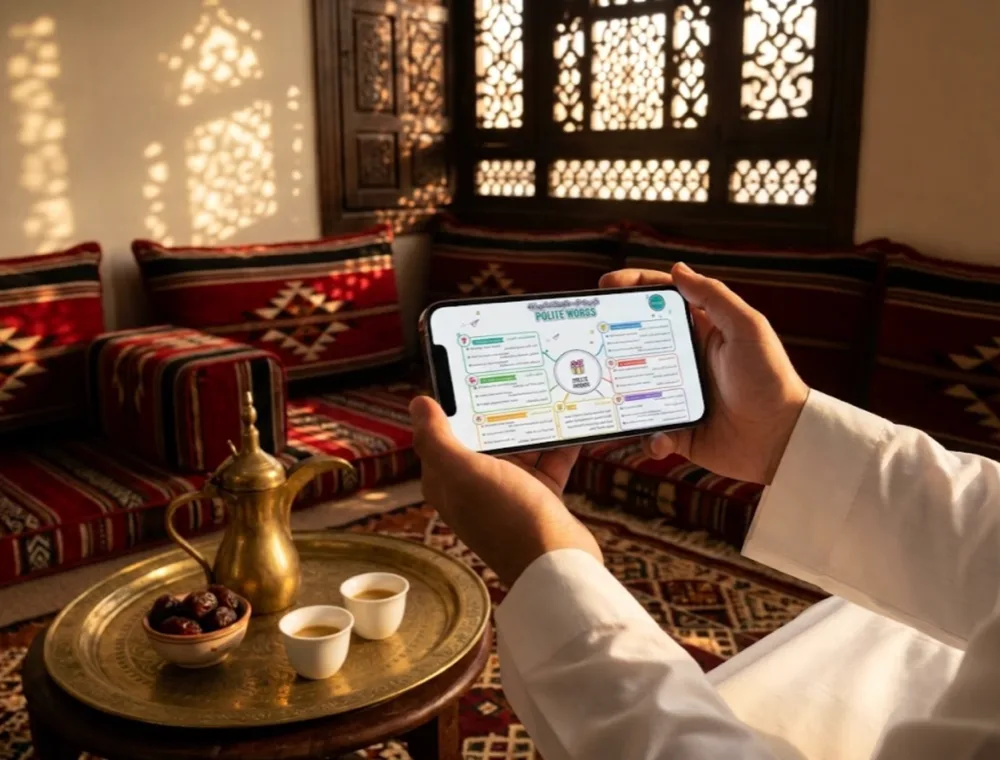
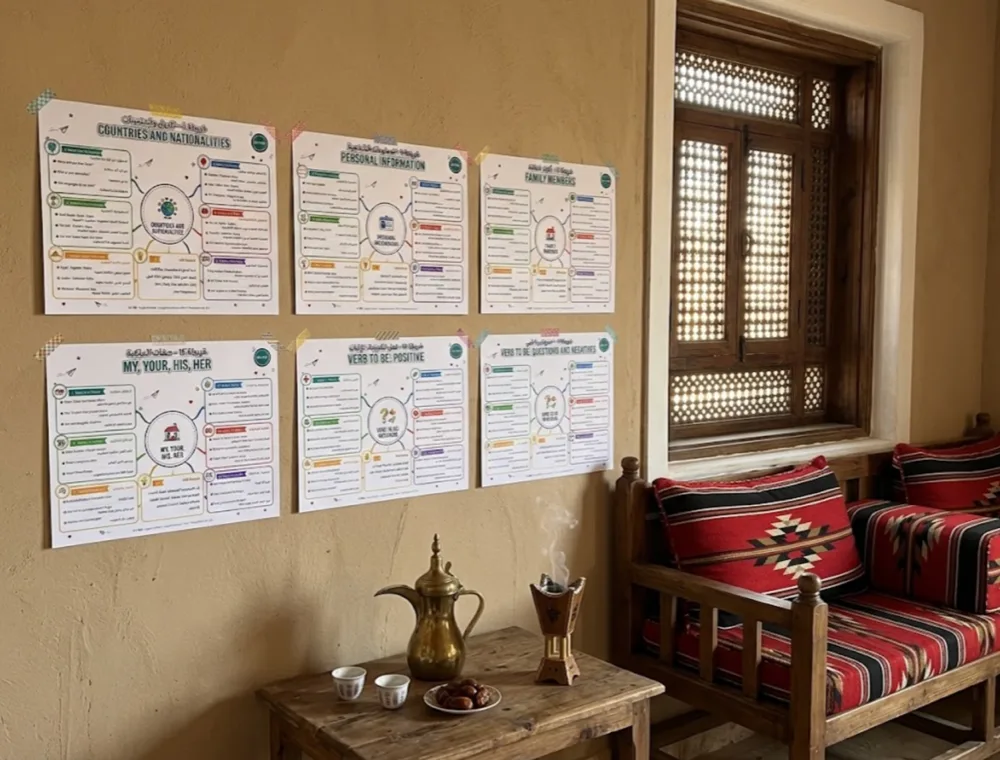
Greetings • Introducing yourself • The alphabet and spelling your name • Numbers 0–20 • Numbers 20–1000 • Classroom English • Polite words • Countries and nationalities • Personal information • Saying goodbye • Family members • Describing appearance • Personality words • My, your, his, her • Verb to be: positive • Verb to be: questions and negatives • Have / has • Jobs • Age and birthdays • Feelings
Maps 21–40+
Telling the time • Days of the week • Months and seasons • Dates and ordinal numbers • Daily routine • Present simple: I, you, we, they • Present simple: he, she, it • Present simple questions • How often? • The weekend • Rooms • Furniture • There is / there are • Prepositions of place • Housework • In the kitchen • Colors and shapes • Describing my home • Places in my neighborhood • Asking for directions
Maps 41–60+
Food • Drinks • Fruit and vegetables • Countable and uncountable nouns • Some / any • At the café • At the restaurant • Likes and dislikes • Cooking verbs • Healthy food • Clothes • Shoes and accessories • Money and prices • This, that, these, those • At a clothes shop • At the supermarket • Comparing things • The best / the biggest • Shopping online • Returning something
Maps 61–80+
Hobbies • Sports • Can / can't • Music and films • Invitations • Plans with "going to" • Present continuous • Present simple or continuous? • Weather • Holidays and Eid • Transport • At the airport • At the hotel • Buying a ticket • City and village • Places to visit • Asking for help • Was / were • Past simple: regular verbs • Past simple: irregular verbs
Maps 81–100+
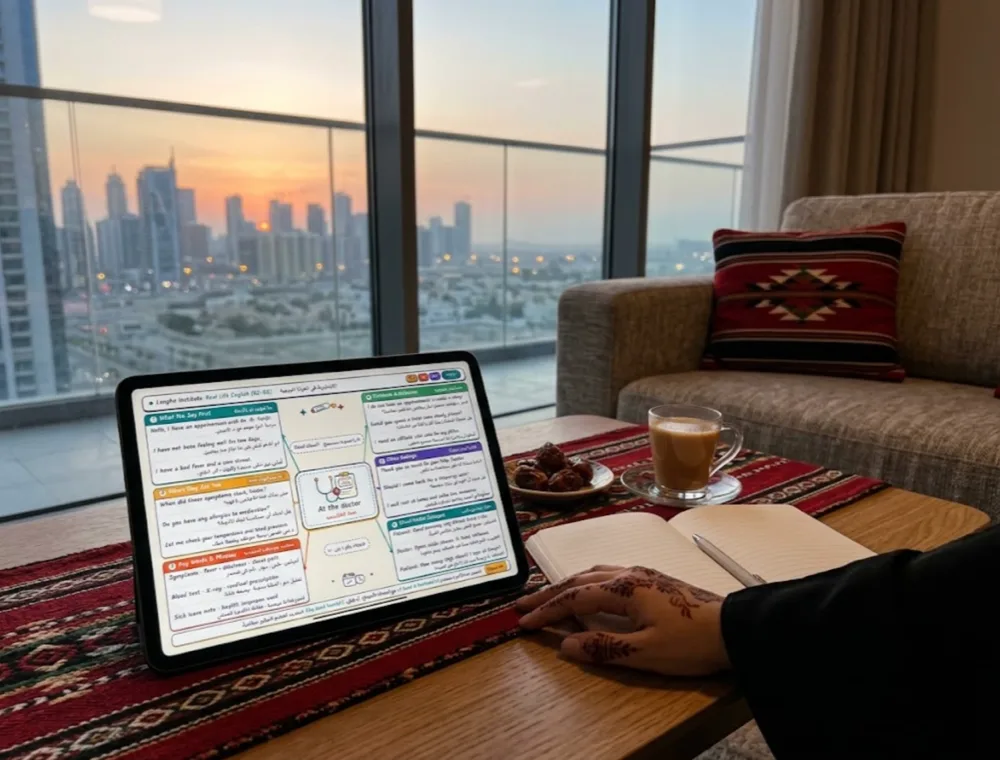
The body • At the doctor • Common illnesses • At the pharmacy • Should / shouldn't • Emergencies • Healthy habits • Past simple questions • Telling a story • Last weekend • On the phone • Short messages • A simple email • Future with "will" • Offers and promises • Question words • Me, him, her, them • And, but, because, so • My city • Review: A1–A2 in one map
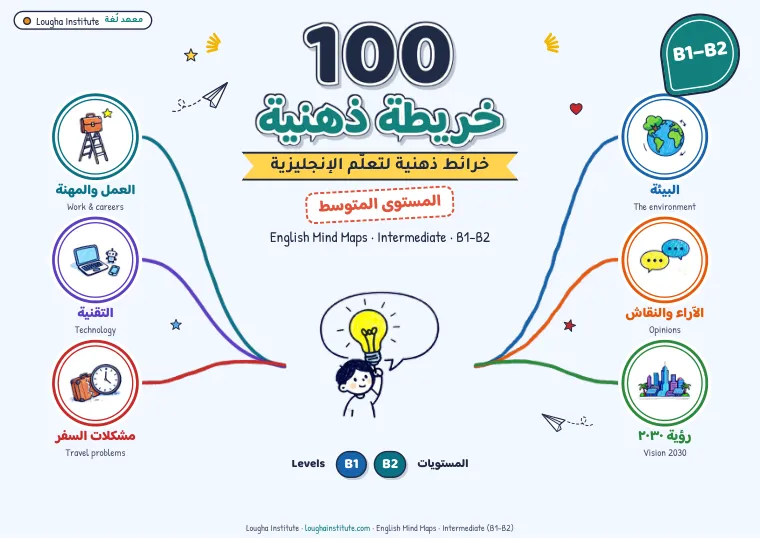
Part 2 · Intermediate B1–B2 100 maps
All the tenses, conditionals, the passive and giving your opinion.
Maps 101–120+
Present simple vs present continuous • Past simple vs past continuous • Used to • Present perfect: experience (ever / never) • Present perfect: for / since • Present perfect vs past simple • Present perfect continuous • Past perfect • Future forms: will, going to, present continuous • Future continuous • Zero and first conditional • Second conditional • Wishes about the present • Modals of ability (can, could, be able to) • Modals of obligation (must, have to, don't have to, mustn't) • Modals of advice (should, ought to, had better) • Modals of possibility (may, might, could, must, can't) • Passive: present and past • Passive: other tenses • Have something done
Maps 121–140+
Reported statements • Reported questions • Reported requests and commands • Relative clauses (who, which, that) • Where, whose, when • Gerund or infinitive • Verbs + -ing • Verbs + to • Too and enough • So and such • Comparatives and superlatives (advanced) • Adverbs of manner • Articles a / an / the • Quantifiers (a few, a little, plenty of, hardly any) • Question tags • Indirect questions • Phrasal verbs: daily life • Phrasal verbs: work • Phrasal verbs: relationships • Phrasal verbs: travel
Maps 141–160+
Work and careers • Job interviews • Meetings • Emails at work • Presentations • Customer service • Money and banking • Studying abroad • University life • Technology • Social media • Health and fitness • Food culture • Travel problems • Booking and complaints • Renting an apartment • The environment • Weather and climate • News and media • Shopping and consumer rights
Maps 161–180+
Feelings and emotions (advanced) • Agreeing and disagreeing • Giving opinions • Making suggestions • Apologizing and responding • Persuading • Telling stories • Describing places • Describing people (advanced) • Describing objects • Collocations: make / do • Collocations: have / take • Collocations: get • Prefixes • Suffixes • Word families • Confusing words 1 • Confusing words 2 • Linking words: contrast • Linking words: cause and result
Maps 181–200+
Idioms: everyday • Idioms: feelings • Small talk • On the phone (advanced) • At the hospital • Sports and events • Celebrations and traditions • Hobbies (advanced) • Volunteering • Family life (advanced) • Saudi Vision 2030 and the future • Tourism in Saudi Arabia • Hajj and Umrah services • Driving and roads • Housing • Education choices • Goals and plans • Problem solving • Writing a short essay • Review: B1–B2 in one map
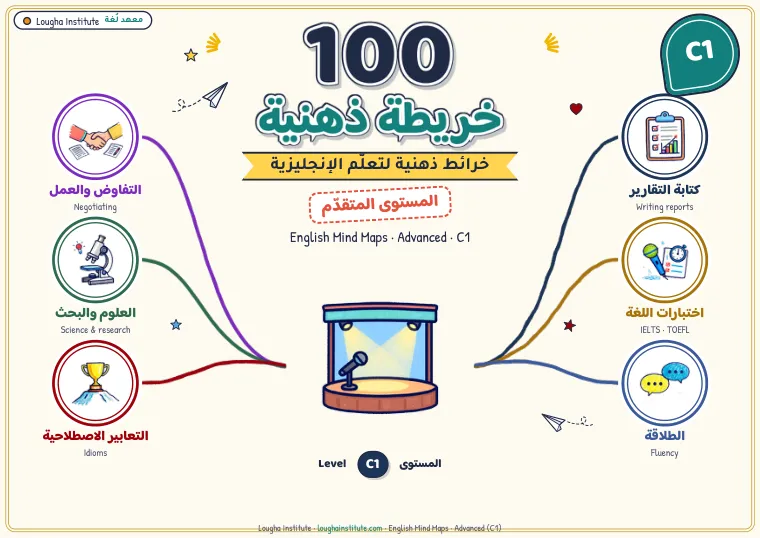
Part 3 · Advanced C1 100 maps
Mixed conditionals, inversion, cleft sentences and formal style.
Maps 201–220+
Narrative tenses (review) • Future perfect • Future in the past • Third conditional • Mixed conditionals • Wishes and regrets • Inversion after negative adverbials • Inversion in conditionals • Cleft sentences (It is/was ... that/who) • Cleft sentences (What ... is/was) • Advanced passive • Passive reporting verbs • Causative forms • Modals of deduction in the past • Advanced modals • The subjunctive • Participle clauses • Reduced relative clauses • Ellipsis and substitution • Emphasis with do / does / did
Maps 221–240+
Advanced reported speech • Reporting verbs • Hedging • Discourse markers • Formal vs informal register • Nominalization • Academic vocabulary • Linking ideas in writing • Paraphrasing • Summarizing • Phrasal verbs: business • Phrasal verbs: emotions • Phrasal verbs: conflict • Phrasal verbs: ideas • Phrasal verbs: change • Phrasal verbs: communication • Phrasal verbs: money • Phrasal verbs: time • Phrasal verbs: health • Phrasal verbs: plans
Maps 241–260+
Idioms: success • Idioms: failure • Idioms: work • Idioms: people • Idioms: decisions • Idioms: time • Idioms: money • Idioms: speaking • Idioms: problems • Idioms: luck • Negotiating • Leading meetings • Giving feedback • Handling complaints • Public speaking • Debating • Interviews (senior roles) • Networking • Writing reports • Writing proposals
Maps 261–280+
Economics • Science and research • Law and rights • Government e-services • Psychology • Medicine • Engineering • Art and design • Literature • Media and journalism • Collocations (strong, heavy, deep...) • Intensifiers • Softening language • Sarcasm and irony (recognizing them) • Euphemisms • Word formation (advanced) • Confusing words (advanced) • Spelling traps • Pronunciation: connected speech • Intonation and meaning
Maps 281–300+
IELTS / TOEFL speaking: task types • IELTS / TOEFL speaking: structuring answers • IELTS / TOEFL speaking: useful vocabulary • IELTS / TOEFL speaking: timing and fluency tips • IELTS Writing Task 1: reporting charts (overview, key features) • IELTS Writing Task 2: essay structure • TOEFL Writing (2026): email and academic discussion • Exam writing: cohesion and linking • Exam writing: academic style and vocabulary • Exam day strategies (timing, checking, nerves) • Fluency challenge: describing graphs and trends in speech • Fluency challenge: comparing ideas • Fluency challenge: cause and effect • Fluency challenge: problem and solution • Fluency challenge: persuading • Fluency challenge: storytelling • Fluency challenge: abstract topics • Fluency challenge: hypotheticals • Fluency challenge: speculation • Review: C1 in one map
 Lougha Books
العربية